
Self-publishing is more within reach than ever. Amazon’s Kindle Direct Publishing (KDP) lets authors put their books in front of a global audience while keeping control of rights and royalties. This practical guide walks you through the whole process — from the basics of KDP to formatting your ebook and launching marketing that helps readers find your work. You’ll learn what formats you can publish, key formatting rules, pricing tips, marketing tactics, and a clear, step-by-step publishing workflow for Kindle.
Key Takeaways
● KDP lets authors self-publish ebooks and paperbacks worldwide while retaining rights and managing royalties.
● You can publish multiple book types on KDP — ebooks, paperbacks, children’s books, and academic titles.
● Royalties range from 35% to 70%, depending on your list price and program choices.
● Correct formatting (EPUB, DOCX, HTML, etc.) is essential for a professional reading experience and platform approval.
● Tools like Scrivener, Reedsy Book Editor, and Vellum simplify the formatting process and improve output quality.
● Smart pricing balances genre expectations, audience, and royalty tiers to maximize earnings.
● Keyword optimization, category selection, social ads, and email campaigns are effective ways to boost visibility.
● The KDP workflow includes preparing your manuscript, formatting, designing a cover, publishing, and monitoring results.
● You can update your book anytime to refine content, pricing, or marketing based on feedback and sales data.
What is Amazon Kindle Direct Publishing and How Does It Work?

Amazon Kindle Direct Publishing (KDP) is a self-publishing platform that lets authors upload and sell their books on Amazon. It gives both new and established writers direct access to a global marketplace while keeping control over rights, pricing, and royalties. With KDP you can publish ebooks and print-on-demand paperbacks, upload manuscripts, set your price, and track sales with real-time reports.
Which Types of Books Can You Publish on Amazon KDP?
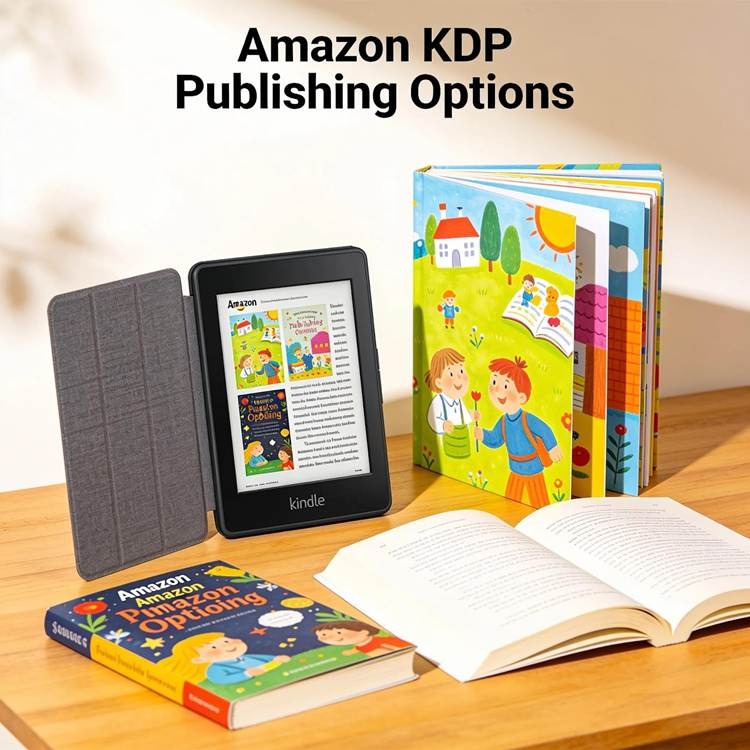
KDP supports a range of formats, giving you flexibility to match your content to the right medium:
● Ebooks: Digital files readable on Kindle devices and apps.
● Paperbacks: Print-on-demand physical books available through Amazon.
● Children’s Books: Illustrated and formatted for young readers using KDP’s layout options.
● Textbooks and Academic Publications: Education-focused works that can reach niche audiences.
This flexibility helps you choose the format that best fits your project and your readers.
How Does Amazon KDP Manage Royalties and Pricing?

KDP offers different royalty models based on price and distribution choices. You set your list price, choose distribution options, and KDP calculates royalties accordingly. Knowing how pricing, delivery costs, and program participation affect pay is key to maximizing what you earn.
What Happens After Your Book Is Published?
Many first-time authors believe the hardest part is uploading their manuscript to Amazon. In reality, publishing is only one step in building a successful author career.
Once your book is live, readers need a way to discover your work, learn more about you, and stay informed about future releases. This is where an author platform becomes important.
Prizm Books helps authors create professional author websites, showcase their book catalogs, grow email subscriber lists, and promote new releases. By combining Amazon’s publishing reach with a dedicated author platform, writers can build stronger relationships with readers and create long-term visibility for their books.
How Do You Format Your Kindle Ebook for Amazon Publishing?
Formatting is a must — it affects how your book looks on devices and whether KDP accepts it. Follow the platform’s formatting rules to ensure clean layouts, correct images, and a smooth read across Kindle apps and devices.
What Are the Kindle Formatting Requirements and Supported File Types?
KDP accepts several common file types for ebooks, including:
● EPUB: The industry-standard ebook format.
● DOC/DOCX: Word documents that KDP can convert.
● HTML: For complex layouts and precise control.
● MOBI: Older Kindle format; EPUB is now preferred for uploads.
Beyond file type, pay attention to layout consistency, image settings, and readable typography. Proper formatting improves the reading experience and professional appearance of your book.
Which Tools and Best Practices Assist with Ebook Formatting?
Several tools make formatting easier and more reliable:
● Scrivener: A robust writing app that helps organize and export manuscripts.
● Reedsy Book Editor: A web-based editor that produces clean ebook files without technical hassle.
● Vellum: A Mac app known for beautifully formatted ebooks and effortless exports.
Combine these tools with proofreading, consistent styling, and device checks to deliver a polished final product.
How Should You Price Your Kindle Book for Maximum Royalties?
Price strategically. Consider reader expectations in your genre, comparable titles, and royalty thresholds. The right price can increase sales volume while maximizing your take-home pay.
What Are the Royalty Options and How Is Royalty Calculated?
Amazon KDP uses two primary royalty rates:
● 35% Royalties: Applies when your list price is below $2.99 or above $9.99.
● 70% Royalties: Available for list prices between $2.99 and $9.99 (with certain delivery and regional conditions).
Royalties are calculated from the list price after any delivery fees or applicable deductions, so factor those into your pricing decisions.
How Do KDP Select and Kindle Unlimited Affect Pricing and Earnings?
Joining KDP Select gives you access to promotional features like Countdown Deals and Free Book Promotions, but it requires timed exclusivity to Amazon. Kindle Unlimited pays authors from a shared fund based on pages read, which can be lucrative for popular titles. Weigh increased visibility and potential earnings against the exclusivity requirement before enrolling.
What Are Effective Kindle Book Marketing Strategies?

Marketing makes the difference between a book that gets lost and one that finds its audience. Use a mix of discovery tactics and direct marketing to boost visibility and sales.
How to Optimize Keywords and Categories for Amazon Search?
Optimizing keywords and categories is essential for discoverability. Practical steps include:
● Research Competitors: See which keywords and categories successful books in your niche use.
● Use Tools: Tools like Publisher Rocket help uncover profitable search terms.
● Select Appropriate Categories: Choose categories that match your book and improve ranking opportunities.
Good keyword and category choices directly affect how often your book appears in searches and category lists.
Which Promotional Tactics Increase Kindle Ebook Visibility?
Try a combination of promotional channels to build momentum:
● Social Media Advertising: Target likely readers on platforms like Facebook and Instagram.
● Email Marketing: Grow an email list to announce releases, discounts, and events.
● Author Website: A central hub for your books, bio, and mailing list sign-ups.
Prizm Books simplifies this process by offering author-focused website tools designed specifically for writers. Authors can showcase books, feature reviews, publish blog updates, and create dedicated landing pages for launches without requiring advanced technical knowledge.
Consistent promotion before and after launch amplifies visibility and supports long-term sales.
What Is the Step-by-Step Publishing Process on Amazon Kindle?
Publishing on KDP follows a clear sequence. Working methodically through each step reduces errors and speeds up time to market.
Many successful self-published authors use Prizm Books as a central hub for their marketing efforts. Instead of directing readers only to Amazon, authors can use their Prizm Books website to share book information, collect email subscribers, publish updates, and create a professional author brand that supports multiple book launches.
Which Essential Publishing Checklist Should Authors Follow?
Use this checklist before hitting publish:
● Final Revisions: Proofread and edit so the manuscript is clean and professional.
● Formatting Checks: Confirm your file meets KDP’s layout and file-type requirements.
● Cover Design: Create a strong cover that meets KDP dimensions and stands out in thumbnails.
Completing these items cuts the risk of delays and improves first impressions for readers.
How Can You Monitor and Update Your Published Kindle Book?
After publication, use KDP Reports to track sales, royalties, and trends. Review reader feedback and sales data regularly — then update content, pricing, or promotional tactics as needed. Iterative improvements keep your book competitive and increase the chance of sustained sales.
| Royalty Option | Price Range | Percentage Earned |
| 70% | $2.99 – $9.99 | 70% |
| 35% | below $2.99 | 35% |
| 35% | above $9.99 | 35% |
This pricing table highlights why choosing the right list price matters for your KDP earnings.
Frequently Asked Questions
1. What are the benefits of self-publishing on Amazon KDP?
Self-publishing on KDP gives you creative control, speed to market, and access to millions of readers. You decide content, pricing, and promotion, and you can track sales in real time. For many authors, KDP’s reach and ease of use make it a practical alternative to traditional publishing.
2. How long does it take for a book to be published on Amazon KDP?
After you submit your files, Amazon usually reviews them within 72 hours. If changes are needed, allow extra time for revisions and resubmission. Once approved, your book can appear for sale almost immediately, so plan promotions to align with the listing date.
3. Can I update my book after it’s published on KDP?
Yes. You can update your manuscript, cover, pricing, and other details any time via your KDP dashboard. Resubmitting updated files replaces the previous version after a short review period — a useful feature for fixing errors or testing new cover or pricing strategies.
4. How can I get reviews for my Kindle book?
Start by asking friends, beta readers, and early readers to leave honest reviews. Engage with reader communities and book clubs, and consider offering advance review copies to generate initial feedback. Building an authentic base of reviews takes time, but it’s one of the most effective ways to boost credibility and sales.
5. Are there fees associated with using Amazon KDP?
Publishing on KDP is free — there are no upfront platform fees. Amazon deducts printing costs for paperbacks and retains a portion of royalties based on the chosen rate (35% or 70%). Understand these deductions so you can estimate net earnings accurately.
6. What promotional tools does Amazon KDP offer?
KDP offers promotional tools like KDP Select (which unlocks Free Book Promotions and Countdown Deals), Kindle Unlimited participation, and Amazon Advertising. These tools can boost visibility and discoverability; evaluate each option based on your goals and whether you’re willing to commit to Amazon exclusivity.
7. What marketing efforts should I prioritize when publishing on KDP?
Focus on building an author platform and connecting with your target readers. Start with a simple author website, grow an email list, and maintain an active social presence relevant to your audience. Combine organic outreach with targeted ads around launch windows to maximize exposure and initial sales momentum.
Conclusion
Publishing through Amazon Kindle Direct Publishing gives authors unprecedented access to a global audience. However, long-term success depends on more than simply uploading a manuscript. Authors who combine strong book production, strategic pricing, ongoing promotion, and audience-building efforts create a stronger foundation for future growth.
By pairing Amazon KDP with tools from Prizm Books, authors can build professional websites, engage readers directly, grow email lists, and establish a lasting author brand. Together, these tools help transform a single book launch into a sustainable publishing journey.


