

Starting a book club is a chance to build community, read more thoughtfully, and sharpen the way you talk about books. This guide gathers practical templates, facilitation tips, and recruitment tools to walk you through each step of launching and sustaining a lively reading group. You’ll find clear strategies for attracting members, keeping engagement high, and running conversations that feel inclusive and rewarding. Key sections cover how to get started, craft discussion guides, structure meetings, adapt to virtual formats, and choose books that keep members coming back.
Key Takeaways
● Begin with a clear vision, defined roles, and ready-to-use templates to streamline organization and member engagement.
● Organizers keep things running smoothly by handling scheduling, communication, and creating a welcoming space for discussion.
● Templates and digital tools simplify recruitment, reminders, and logistics for both in-person and virtual groups.
● Strong discussion guides rely on open-ended and theme-focused questions that invite thoughtful, inclusive responses.
● Use structured agendas and follow-up templates to keep meetings focused and sustain participation between sessions.
● Virtual and hybrid groups benefit from video platforms and shared documents to preserve interaction and collaboration.
● Curate book selections with member input and thematic schedules to keep your lineup fresh and engaging.
● Icebreakers, clear guidelines, and conflict-ready protocols help build community and support diverse reading styles.
● Integrating social media and online tools boosts accessibility and ongoing conversation beyond meetings.
How Do You Start a Book Club? Step-by-Step Templates and Role Definitions
Launching a successful book club is easier when you follow a simple plan: define your purpose, recruit a core team, and use templates to clarify tasks. A thoughtful structure helps you attract members and keep momentum—templates remove guesswork so everyone knows what to do and when.
What Are the Essential Roles and Responsibilities of a Book Club Organizer?
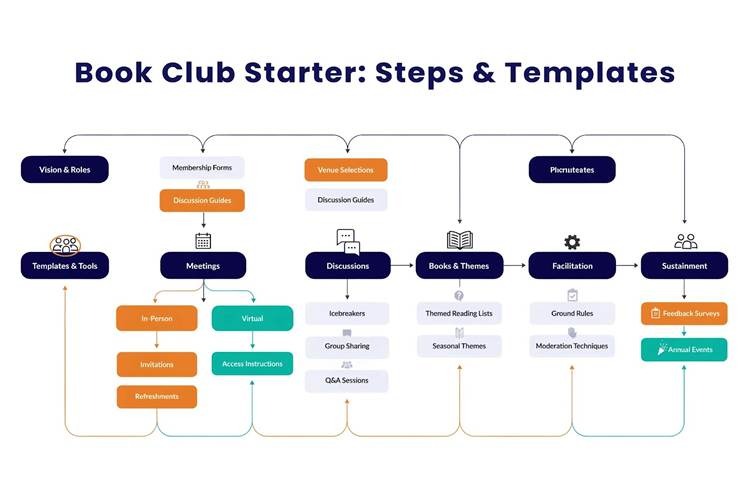
Many clubs hinge on a few key roles, with the organizer steering the effort. Typical duties include scheduling meetings, managing invites and reminders, and creating a warm, respectful environment for conversation. Organizers also set the meeting agenda, encourage participation, and guide discussions so they stay focused and energizing for everyone involved.
Which Tools and Planning Templates Help Recruit and Manage Members Effectively?
Recruitment and member management become manageable with the right templates: membership lists, invitation copy, RSVP trackers, and automated reminder scripts. Communication platforms—email groups, messaging apps, or social media—paired with simple spreadsheets or shared docs make it easy to coordinate meetings, collect preferences, and follow up with members consistently.
Once your group is established and members are actively participating, the next challenge is creating discussions that go beyond simple plot summaries. Well-crafted discussion guides help readers explore themes, characters, and ideas in ways that lead to more engaging and memorable conversations.
What Makes an Effective Book Club Discussion Guide? Question Types and Facilitation Tips

A thoughtful discussion guide helps conversations move from plot summary to deeper reflection. Good guides offer a mix of question types, prompts that connect the text to members’ lives, and facilitation notes that make it easier to include quieter voices and keep the dialogue productive.
How Can Open-Ended and Thematic Questions Enhance Book Club Conversations?
Open-ended questions invite interpretation and personal response, while thematic prompts steer discussion toward the book’s central ideas. For example: “What do you think the author is saying about friendship in this novel?” Such prompts open space for varied perspectives and richer conversation.
What Are Best Practices for Facilitating Inclusive and Engaging Book Discussions?
Foster inclusion by inviting different viewpoints, setting simple ground rules, and using facilitation techniques like brief check-ins, gentle summarizing, and time-boxed sharing. Encourage quieter members with direct but respectful prompts, and treat disagreements as opportunities to explore the text rather than debates to win.
How to Use Book Club Meeting Agendas and Communication Templates for Smooth Sessions
A clear agenda keeps meetings focused and respectful of people’s time. When members know what to expect, discussions are more productive and everyone can prepare with confidence.
What Should a Book Club Meeting Agenda Include? Structured Templates to Follow
Good agendas list the book title, key discussion questions, time allocations, and any planned activities. Include brief segments for introductions, a recap of the last meeting, and a short ‘‘fun fact’’ about the author or genre to spark curiosity and set the tone.
How to Craft Effective Follow-Up Scripts and Member Communication Plans?
Follow-up messages should be warm and action-oriented: thank participants, share notes or highlights, and remind everyone of the next meeting and book choice. Use short, friendly templates for emails or chat messages to keep momentum and invite ongoing conversation between meetings.
How Are Virtual and Hybrid Book Club Kits Adapted for Recent Trends? Tools and Templates Included

Digital formats require a few adjustments, but they also open new ways to connect. This section outlines tools and templates that make virtual and hybrid meetings feel as engaging and organized as in-person gatherings.
Which Digital Templates Facilitate Online and Hybrid Book Club Meetings?
Use shared meeting agendas, collaborative notes (like Google Docs), and standardized Zoom or Meet invitations to streamline virtual sessions. Combine video calls with a shared document so everyone can add questions and comments in real time—this helps replicate the give-and-take of an in-person discussion.
What Recent Social Reading Behaviors Influence Virtual Book Club Planning?
Online reading habits have shifted toward shorter, themed conversations and ongoing social interaction. Members often prefer concise sessions focused on a single theme rather than long, wide-ranging meetings. Integrating social platforms can keep conversations alive between meetings and attract new participants.
A successful book club depends on more than organization and discussion techniques. Consistently selecting books that excite and challenge members is one of the most important factors in maintaining long-term engagement and participation.
How to Select Books and Plan Thematic Reading Schedules Using Customizable Templates
Picking books that match your group’s interests and rhythm is key to long-term engagement. Use templates to organize suggestions, track votes, and build themed schedules that keep the club fresh and inviting.
What Strategies Help Curate Book Titles and Theme-Based Reading Lists?
Curate with intention: balance member favorites with a few surprising picks, rotate genres, and tie selections to themes or events. Invite members to nominate titles and vote, or set monthly themes—this keeps choices democratic and sparks anticipation for what’s next.
Resources such as Prizm Books can help book club organizers discover new releases, timeless classics, and genre-specific recommendations that align with the interests of their members. Access to a diverse range of titles makes it easier to build reading schedules that remain fresh and engaging throughout the year.
How Can Reading Group Facilitators Use Planning Templates to Maintain Engagement?
Planning templates help facilitators log discussion notes, track future proposals, and gather supplemental resources like author interviews and relevant articles. Keeping these records organized makes it easy to build continuity across meetings and offer members richer context for each read.
Building Stronger Reading Communities with Prizm Books
Every successful book club begins with great books and thoughtful conversations. While templates and discussion guides help structure meetings, the books themselves create the experiences that keep members coming back.
Prizm Books supports readers, book clubs, and literary communities by helping them discover compelling titles across genres and interests. Whether your group enjoys contemporary fiction, historical narratives, biographies, or thought-provoking nonfiction, access to carefully selected books can make every discussion more rewarding.
By combining strong organization with meaningful reading experiences, book clubs can become lasting communities built around learning, connection, and a shared passion for literature.
Frequently Asked Questions
What challenges might I face when starting a book club?
Common challenges include finding your first members, choosing meeting times that work for everyone, and navigating differing tastes in books. You may also run into lulls in conversation or disagreements over choices. Clear guidelines, defined roles, and a welcoming tone usually prevent most issues and help new groups thrive.
How often should a book club meet?
Monthly meetings are the most common—they give members enough time to read and prepare. Some groups prefer bi-weekly or weekly gatherings for shorter texts. The best cadence matches your members’ schedules and the length of your selections.
Can book clubs focus on specific genres, or should they be diverse?
Both approaches work. Genre-specific clubs attract readers with shared interests, while mixed-genre clubs expose members to new voices and ideas. Decide with your group: a clear focus can build identity, while variety keeps things surprising.
What are some icebreaker activities to engage new members?
Start with quick introductions that ask about a favorite book or author, or play a short themed trivia round related to the month’s selection. Simple prompts—”What character felt most real to you?”—also help people jump into conversation without pressure.
How can technology enhance book club experiences?
Technology expands access: video calls let distant members join, shared docs centralize notes, and social media keeps conversation going between meetings. Use group chats for casual check-ins and shared folders for meeting materials to make participation easy and ongoing.
What are some creative themes for book selections?
Try themes like “Books from Around the World,” “Page to Screen,” seasonal reads, or author spotlights. Themed months give members a framework for recommendations and create built-in variety across your reading calendar.
How can I accommodate members with different reading paces?
Offer a mix of lengths and formats, set flexible schedules, and focus discussions on themes rather than chapter-by-chapter recaps. You can also provide brief summaries or optional reading guides so everyone can join the conversation meaningfully.
Conclusion
Book clubs create opportunities for meaningful discussions, deeper reading experiences, and lasting connections among readers. With clear planning, effective discussion guides, and practical templates, organizing a successful reading group becomes much easier and more enjoyable.
At Prizm Books, we believe that every great conversation starts with a great book. Whether you are launching your first reading group or expanding an established community, the right books, resources, and discussion tools can help turn every meeting into an engaging and memorable experience.


