
An insider’s guide to the legal, creative, and commercial steps that turn page‑bound stories into screen productions.
How Books Become Films and TV Shows: Understanding the Film Adaptation Process and Rights Negotiation
Turning a beloved book into a memorable film or series is both an artistic journey and a business negotiation. This article walks through how adaptations happen: how rights are secured, how screenplays are developed, and how authors and agents collaborate with studios. Along the way we’ll cover key phases—screenwriting, creative input from authors, casting choices, and production—to give a clear view of what it takes to move a story from the page to the screen.
Key Takeaways
● Film rights grant legal permission to adapt books into movies or TV shows through negotiated agreements.
● Option agreements allow studios exclusive development rights before fully purchasing adaptation rights from authors.
● Screenplay adaptation involves condensing a book’s story into a visual script while preserving key themes and characters.
● Authors and agents play crucial roles in negotiating rights and influencing creative decisions during adaptations.
● Casting decisions balance character fit, star power, and actor chemistry to serve the adaptation’s goals.
● Production includes pre-production planning, filming, and post-production to realize the adaptation’s creative vision.
● TV series adaptations require episodic structure and character development distinct from film adaptations.
● Streaming platforms have increased demand for diverse book-to-screen adaptations, expanding creative and commercial opportunities.
● Clear rights agreements and collaborative relationships improve adaptation outcomes both creatively and financially.
What Are Film Rights and How Are Book-to-Movie Rights Negotiated?

Film rights are the legal permissions a studio or producer needs to adapt a book into a movie or TV show. Negotiations usually involve the author (or their estate), an agent, and the production company. Those conversations determine who controls the material, for how long, and under what financial terms—making them central to whether an adaptation moves forward.
Which Types of Film Rights Can Be Optioned or Purchased?
Rights can be framed in different ways depending on the scope and intent of the adaptation. Common arrangements include:
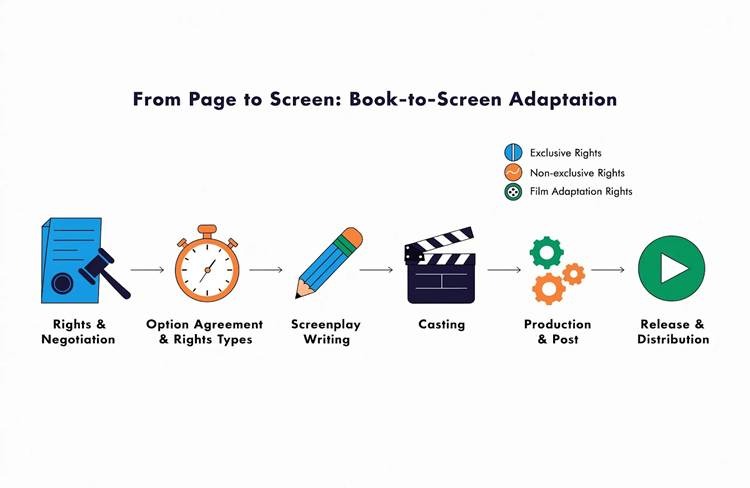
● Exclusive Rights: Grants one buyer sole control to adapt the work, preventing others from making film or TV versions while the agreement is active.
● Non-exclusive Rights: Allows multiple parties to pursue adaptations, often used for limited or niche purposes.
● Film Adaptation Rights: Specifically covers moving the book’s story and characters into a feature film or television series.
The type of right affects creative control, revenue splits, and future opportunities, so authors and agents weigh these choices carefully.
How Do Option Agreements Work Between Authors, Agents, and Studios?
Option agreements are the standard first step: a studio pays for the exclusive right to develop a project for a set period. If they move into production, they exercise the option and buy the full adaptation rights. If not, the rights revert to the author. Option deals define the relationship and set expectations for both sides during development.
● Duration: How long the studio can develop the project before the option expires.
● Payment Terms: The upfront option fee and any promised purchase price, along with potential backend royalties or profit participation.
● Limitations and Conditions: Clauses that may require fidelity to the source, approval rights, or other creative conditions.
Negotiating these terms well can preserve an author’s interests while giving producers the flexibility they need to create a successful adaptation.
How Is a Screenplay Written for a Book Adaptation?
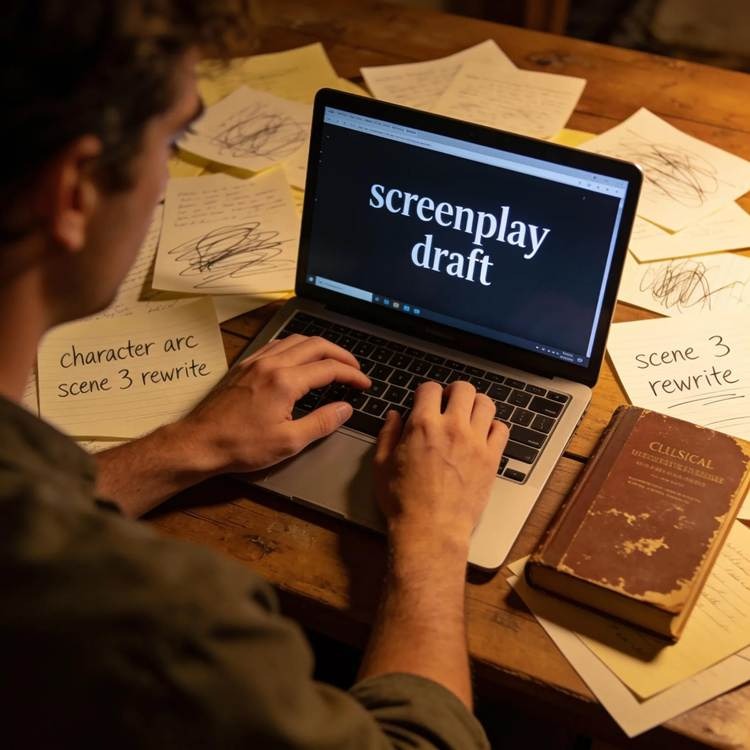
Adapting a book into a screenplay requires distilling a story into a visual, time‑bounded format. The screenwriter must identify the heart of the book—key themes, characters, and arcs—and craft a script that works for actors, directors, and audiences while honoring the source material.
What Are the Key Steps in Screenplay Adaptation From Book to Script?
The adaptation process typically follows a few essential stages:
● Story Analysis: Identify the book’s central conflicts, emotional beats, and characters that must survive the transition.
● Outline Creation: Reconfigure the narrative into a cinematic structure that fits runtime and pacing needs.
● Drafting the Script: Turn the outline into scenes, action lines, and dialogue that read clearly for production.
● Revisions: Refine the screenplay through notes from producers, directors, and sometimes the author.
Each step balances fidelity to the book with choices that serve visual storytelling and audience engagement.
What Challenges Do Screenwriters Face When Adapting Literary Works?
Screenwriters must make selective edits and compressions while keeping the story’s spirit intact. Common challenges include:
● Pacing Issues: Condensing complex plots without losing momentum or essential character moments.
● Character Development: Conveying inner life and growth within a limited runtime or episode count.
● Fan Expectations: Respecting readers’ attachments while making necessary changes for the medium.
Successfully navigating these hurdles requires empathy for the source and a clear sense of cinematic priorities.
How Author Visibility Increases Adaptation Opportunities
Before a book can become a film or television series, producers and studios need to discover it. While bestselling books naturally attract attention, many adaptation deals begin because authors have established a strong professional presence and actively promote their work.
Platforms like Prizm Books help authors showcase their books, build reader communities, and create professional author profiles that make their work more visible to publishers, agents, and entertainment industry professionals. Strong discoverability increases the likelihood that a book will gain the traction needed to attract adaptation interest.
In today’s publishing landscape, a well-presented book with an engaged audience can often generate attention from producers looking for stories with proven reader demand.
What Roles Do Authors and Literary Agents Play in Film and TV Adaptations?
Authors and their agents are key advocates in adaptation deals. Agents negotiate terms and protect financial and creative interests, while authors may contribute creatively or take a hands‑off approach depending on the contract and personal preference.
How Involved Can Authors Be in the Adaptation Process?
Author involvement varies widely. Some serve as consultants or co‑writers, influencing tone and character choices. Others prefer to step back and let filmmakers interpret the work. Contract terms usually specify what input, if any, an author will have, and that involvement can shape the final adaptation significantly.
How Do Literary Agents Facilitate Rights Sales and Studio Negotiations?
Agents bridge the gap between creators and the industry. Their tasks often include:
● Rights Acquisition: Pitching the material to studios and negotiating sale or option deals on behalf of the author.
● Contract Negotiation: Securing favorable payment structures, credits, and protections for the author.
● Strategy Development: Advising on long‑term positioning, subsidiary rights, and dispute avoidance during production.
An experienced agent helps maximize both creative and financial outcomes for an author.
While literary agents remain central to rights negotiations, authors can strengthen their position by building visibility before adaptation opportunities arise. Platforms such as Prizm Books help authors establish a professional online presence, making it easier for industry professionals to discover books that may have adaptation potential.
What Happens During Casting and Production in Book Adaptations?
Once a script is ready, casting and production bring the story to life. Directors, casting directors, and producers collaborate to find actors who embody the characters and fit the project’s creative and commercial goals.
How Are Casting Decisions Made for Film and TV Adaptations?
Casting weighs several considerations to create an effective and marketable ensemble:
● Character Fit: Does the actor capture the role’s essential traits and range?
● Star Power: Can a well‑known performer increase visibility and attract financing or viewers?
● Chemistry Reads: Do actors work convincingly together in key scenes?
The chosen cast must serve the story while helping the project reach its intended audience.
What Are the Key Phases of Production for Screen Adaptations?
Production unfolds in three main stages:
● Pre-production: Planning the shoot, casting, location scouting, and scheduling.
● Filming: Capturing performances and visuals under the director’s direction.
● Post-production: Editing, sound design, visual effects, and final polishing ahead of distribution.
Tight coordination across these phases is essential to realize the adaptation’s creative vision and stay on budget.
How Do Film and TV Series Adaptations Differ?
Films and TV series demand different storytelling strategies. A film must resolve its arc within a limited runtime, while a series can expand character depth and plotlines across episodes and seasons.
What Unique Challenges Exist for TV Series Compared to Films?
TV adaptations face distinct pressures, including:
● Episodic Structure: Building satisfying episode arcs that feed a longer story.
● Character Retention: Keeping viewers engaged over multiple episodes or seasons while evolving characters naturally.
● Viewing Audience Factors: Balancing binge‑ability, pacing, and thematic consistency for serialized platforms.
Effective series adaptations use the format’s breadth to deepen worldbuilding and character exploration.
How Has Streaming Changed the Demand for Book-to-Screen Adaptations?
Streaming services have expanded appetite for literary adaptations by creating more slots and diverse programming needs. Key effects include:
● Increased Demand: Platforms seek varied stories to attract subscribers, boosting opportunities for adaptations.
● Original Productions: Streamers often commission bold, long‑form adaptations tailored to their audience.
● Niche Markets: Titles that were once too specialized can find dedicated viewers on streaming platforms.
This environment has broadened both commercial and creative possibilities for authors and producers.
The surge in streaming content has also increased demand for discoverable books across multiple genres. As platforms compete for fresh intellectual property, authors who maintain strong reader engagement through platforms like Prizm Books may be better positioned to attract industry attention when adaptation opportunities emerge.
How Authors Can Prepare Their Books for Adaptation Opportunities
Not every book will become a film or television series, but authors can take practical steps to improve their chances. Building an audience, maintaining professional book metadata, collecting reader reviews, and creating a recognizable author brand all help demonstrate market interest.
Prizm Books supports these efforts by giving authors tools to showcase their work, organize book information, and connect with readers. While adaptation decisions ultimately depend on producers, studios, and rights negotiations, books with strong visibility and reader engagement often stand out during the discovery process.
Which Recent Case Studies Showcase Successful Book-to-Screen Adaptations?
Recent examples demonstrate how careful rights management, faithful yet flexible adaptation, and strategic platform partnerships can lead to critical and commercial success. They also reveal common pitfalls to avoid during negotiation and production.
What Lessons Do 2024-2026 Adaptations Teach About Rights and Production?
Recent adaptations highlight the importance of clear, comprehensive rights agreements and realistic timelines. Projects with well‑defined terms and collaborative author‑studio relationships typically move more smoothly and reach better outcomes both creatively and financially.
How Have Recent Netflix and Streaming Deals Transformed Adaptation Outcomes?
Deals with major streaming platforms often give creators more space to develop series that remain true to the source while taking advantage of visual storytelling. Direct partnerships with authors or their teams can yield adaptations that satisfy both fans and new viewers, improving engagement and critical reception.
Book‑to‑screen adaptation remains a dynamic mix of craft and commerce. Understanding the negotiation of rights, the demands of screenwriting, and the logistics of production helps authors and producers navigate the process and increase the odds of a successful adaptation.
Frequently Asked Questions
What are the common reasons for a book not being adapted into a film or TV show?
Some books aren’t adapted because their structure or scope doesn’t translate well to screen, or because studios don’t see a viable audience. Prolonged rights disputes, unrealistic budget expectations, or an author’s decision to withhold adaptation rights can also block a project. Creative concerns—such as whether the story can be condensed without losing its core—play a major role.
How do producers decide which books to adapt for film or TV?
Producers look for strong narrative hooks, relatable themes, and market potential. Bestsellers and books with active fanbases often move faster, but producers also consider genre trends, adaptability, and whether a story lends itself to visual dramatization or franchising opportunities.
Can books be adapted into multiple versions across different media?
Yes. A single book can inspire films, TV series, stage plays, and even podcasts—each version reshapes the story to fit its format. Multiple adaptations allow creators to emphasize different themes or perspectives and reach varied audiences.
What legal issues can arise during the adaptation process?
Legal challenges commonly involve unclear ownership, competing claims to rights, or disagreements over contract terms. Copyright disputes can surface if source material includes elements not fully cleared, and authors may contest how their work is used if contractual protections are weak.
How important is audience feedback during the adaptation process?
Audience feedback is increasingly influential. Studios use focus groups, social listening, and test screenings to shape scripts, casting, and marketing. When used thoughtfully, feedback can refine a project without compromising its core creative intent.
What role do screenwriters play during pre-production and production?
In pre‑production, screenwriters revise scripts with input from producers and directors to meet practical needs. During production they may be on hand to tweak dialogue or solve narrative problems that arise on set, helping maintain continuity and preserve the story’s intent.
How can the success of a book-to-screen adaptation be measured?
Success can be gauged by box office or streaming numbers, critical reception, audience engagement, and the adaptation’s cultural impact. Fidelity to the source and the ability to attract new fans while satisfying existing readers are also meaningful indicators.
Conclusion
The journey from book to screen combines creative storytelling, legal negotiations, and commercial decision-making. From securing film rights to developing scripts and producing final adaptations, every stage requires collaboration between authors, agents, producers, and studios.
As streaming services continue expanding their search for compelling stories, authors have more opportunities than ever to attract adaptation interest. Building visibility through platforms like Prizm Books, cultivating an engaged readership, and maintaining a professional author presence can help position books for future film and television opportunities while supporting long-term publishing success.